
Ankle Sprain Rehabilitation in Gujrat
A sprained ankle is one of the most common injuries, whether from sport, uneven ground or a missed step. Many people never fully rehabilitate it, which is why ankles are often sprained again. A structured programme helps you recover properly and reduces the risk of another sprain.

About Ankle sprain
A sprain happens when the ligaments that support the ankle are stretched or torn, most often when the foot rolls inwards. Swelling and bruising are common in the first days. Some people are left with an ankle that feels weak or unstable, especially on uneven ground.
If you could not put weight on the foot straight after the injury, or there is tenderness over the bone, an X-ray may be needed first to rule out a fracture.
How physiotherapy can help
We check the ligaments, the ankle's movement and strength, and your balance, and confirm whether an X-ray is needed.
Early on, the focus is on controlling swelling and getting you walking comfortably. Treatment then progresses to strength, balance and, for active people, hopping, running and sport-specific exercises, so you return with a stable ankle.
Common symptoms
- Swelling or bruising after a twist
- Pain when walking or putting weight on the foot
- The ankle feeling unstable or giving way
- Stiffness, especially in the morning
- Difficulty on stairs or uneven ground
Common causes
- Rolling the ankle during sport
- Uneven ground, steps or kerbs
- Unsupportive footwear
- A previous sprain that did not fully recover
Questions about Ankle sprain
Should I keep my ankle bandaged and rest it?
A short period of protection can help in the first days, but early, gradual movement and walking usually lead to a better recovery than long rest.
Do I need an X-ray?
Not always. If you cannot take four steps, or there is tenderness over certain bones around the ankle or foot, an X-ray is recommended. We check this at your assessment.
Why does my ankle keep giving way?
Ongoing weakness and reduced balance after a sprain are common. Targeted balance and strength exercises usually help.
This page is general information, not a diagnosis. Your assessment decides what treatment, if any, is right for you. Reviewed by Dr. Talha Mahboob, DPT, on 8 November 2026.
Treatment we use
All services
Sports and Exercise-Related Injury Rehabilitation
Sports injuries
A graded, safe return to sport and training.
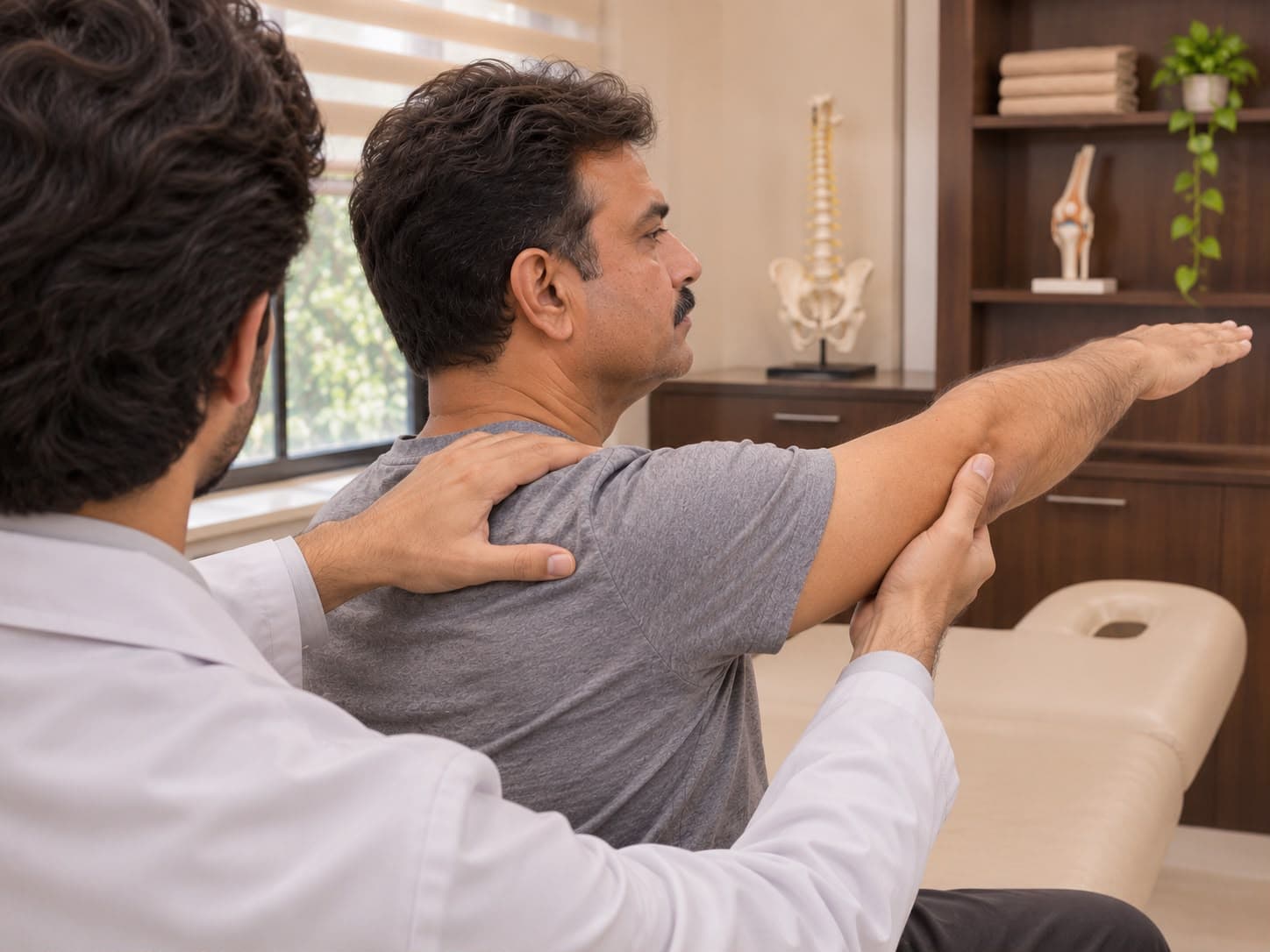
Musculoskeletal Physiotherapy
Back, neck and joint pain
Pain, stiffness and limited movement in muscles, joints and spine.
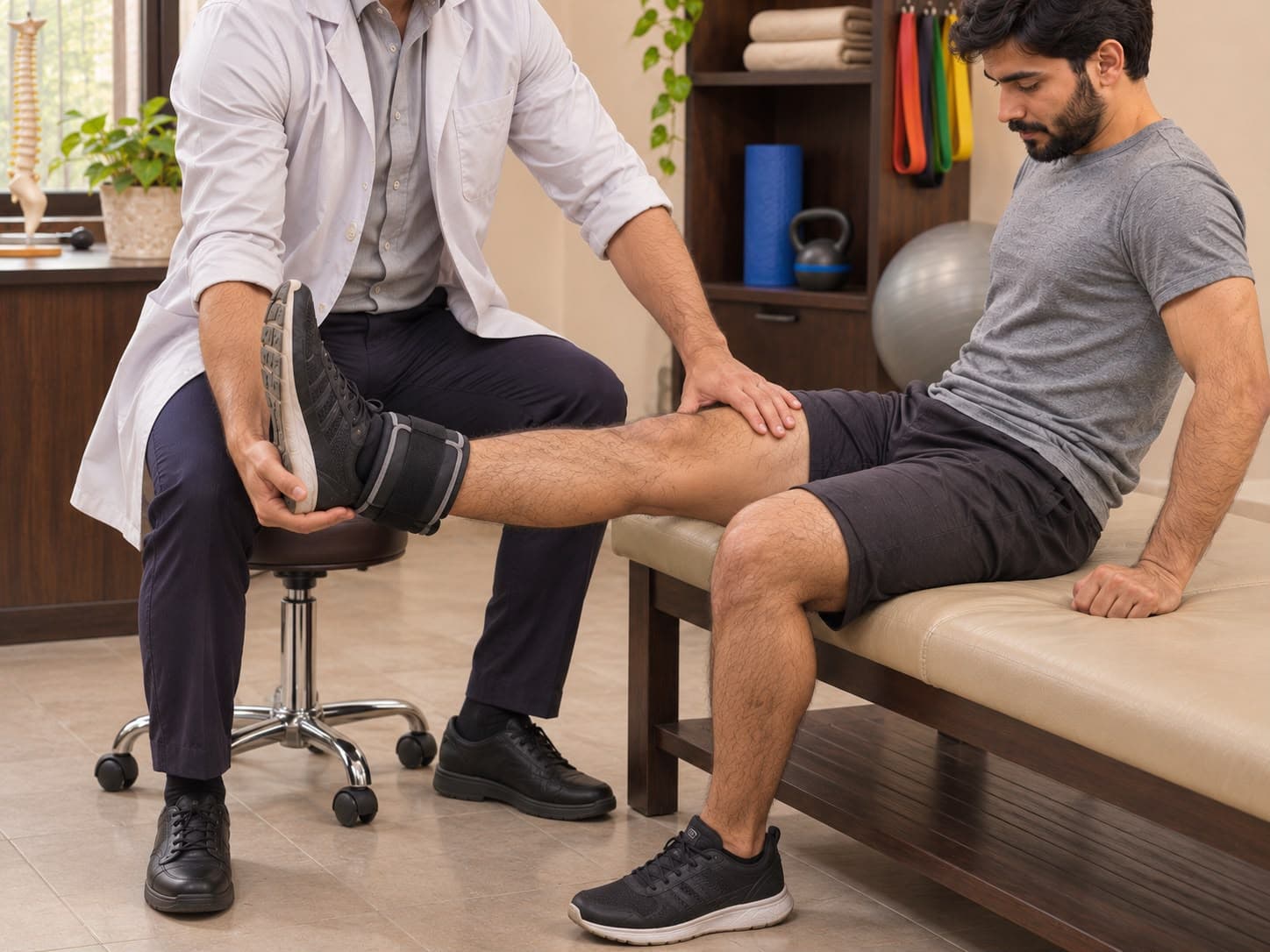
Therapeutic Exercise and Functional Rehabilitation
Strength and recovery
Supervised exercise to rebuild strength and everyday function.